

Halocarbon Reclamation Economics
Halocarbon Supply Curbs Drive Reclamation Technology Alliances
5 October 2026
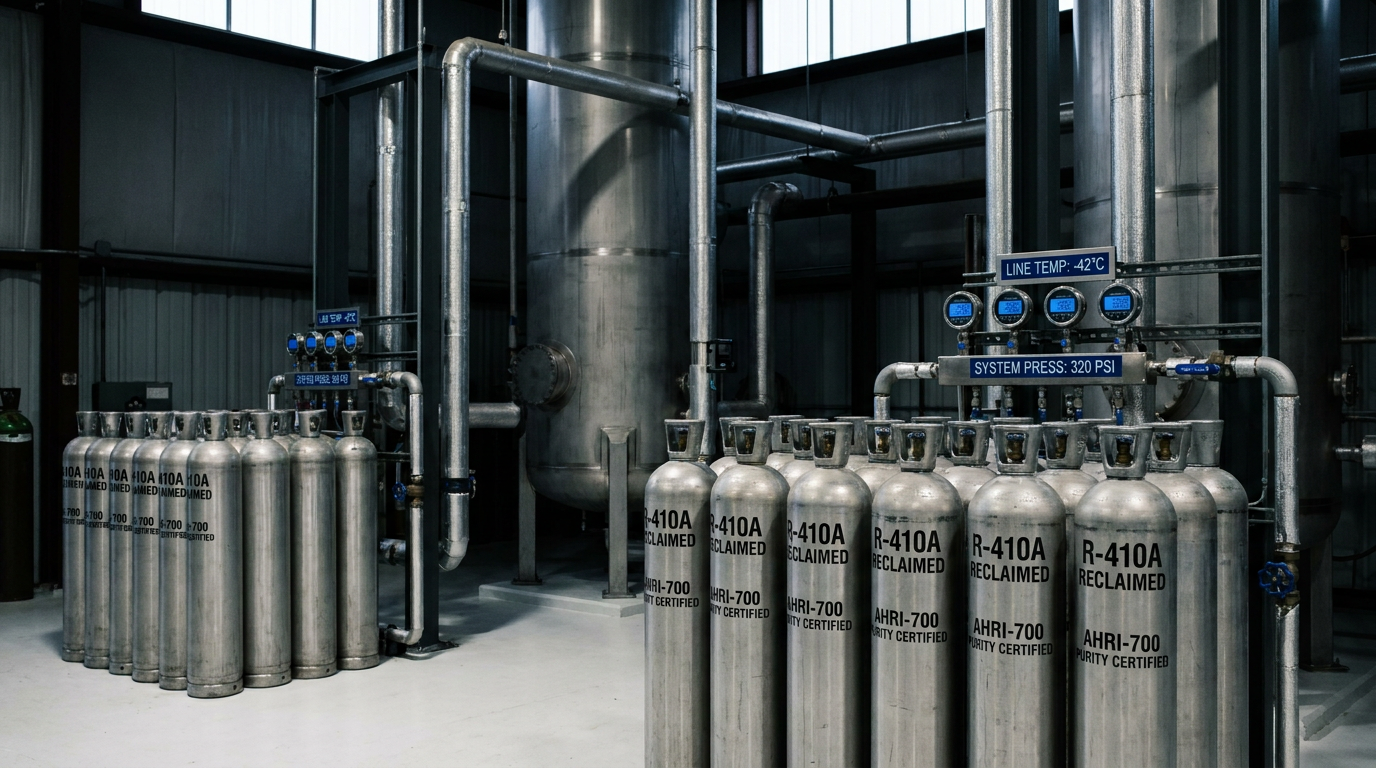
The accelerating implementation of statutory hydrofluorocarbon production step-downs across North America and the European Union has transitioned from a long-dated regulatory framework into an immediate operational constraint. Under the provisions of the United States American Innovation and Manufacturing Act and parallel European Union F-gas regulations, baseline virgin chemical allocations have tightened significantly. This supply contraction is shifting halocarbon reclamation from a fragmented, low-margin scrap collection activity into a strategically vital segment of specialty chemical processing. Yesterday's commercial agreement between Hudson Technologies and chemical technology developer Icorium highlights how processing efficiency and proprietary separation techniques are becoming prerequisite to defending industrial margins in an increasingly quota-constrained market.
The central technical obstacle in halocarbon lifecycle management has long been chemical cross-contamination. Contemporary heating, ventilation, and air-conditioning systems predominantly rely on hydrofluorocarbon blends, such as R-410A, which combines difluoromethane and pentafluoroethane, alongside an array of legacy and transitional refrigerants. When mixed recovery streams are collected from field maintenance operations, standard fractional distillation processes struggle to resolve zeotropic and near-azeotropic mixtures without prohibitive thermal inputs or severe yield losses. Historically, heavily contaminated recovery batches faced commercial incineration, creating a drag on operating margins and wasting stranded halocarbon molecules. The integration of advanced separation architectures, such as novel ionic liquid systems, aims to crack mixed streams economically, unlocking virgin-grade purity from otherwise unrecoverable inventory.
This technological pivot carries direct implications for margin durability. During prior market cycles characterized by unconstrained primary output, reclaimed refrigerants traded at a structural discount to virgin gases, leaving re-refining economics vulnerable to persistent chemical overcapacity. Under current regulatory frameworks, however, virgin production caps represent a rigid ceiling. With baseline production allowances scheduled to step down further toward terminal statutory phase-downs over the coming decade, secondary reclamation represents the only legally permissible source of replacement volume for millions of installed cooling systems. Reclaimed refrigerants that conform strictly to AHRI-700 purity benchmarks now command price parity with primary production, shifting reclamation margins away from volatile commoditization toward stable, high-value specialty chemical pricing.
Simultaneously, the capital dynamics governing reclamation infrastructure are becoming more demanding. Successful operations require more than chemical engineering capabilities; they depend on comprehensive reverse-logistics footprints, certified cylinder fleets, and expansive distribution relationships with commercial wholesale networks. The barrier to competitive entry is fundamentally logistical and balance-sheet intensive. Furthermore, rising halocarbon unit values systematically inflate working capital requirements, as reclaiming operators must commit greater capital to carry raw recovered gas inventories through off-peak replenishment periods. Balance sheets that manage this inventory carrying cost while preserving liquidity through seasonal demand swings will be best situated to absorb smaller regional operators unable to fund compliance and advanced separation upgrades.
From an institutional advisory perspective, the convergence of environmental mandate and separation chemistry illustrates how decarbonization frameworks alter industrial capital allocation. The widespread retirement of existing refrigeration and cooling infrastructure is economically unfeasible in the medium term, creating a long-dated operational bridge where reclaimed high-GWP molecules remain functionally indispensable. While processing integration risks, feed-gas contamination volatility, and uneven regulatory enforcement remain operational headwinds, the technological maturation of the halocarbon recycling sector underscores a broader structural shift: regulatory phase-downs are driving technological alliances that convert environmental liabilities into high-margin industrial inputs.
This commentary is provided for general information only and does not constitute investment, legal or tax advice.