

Rail Equipment Capitalization
Locomotive Service Agreements Anchor Rail Capital Goods
27 September 2026
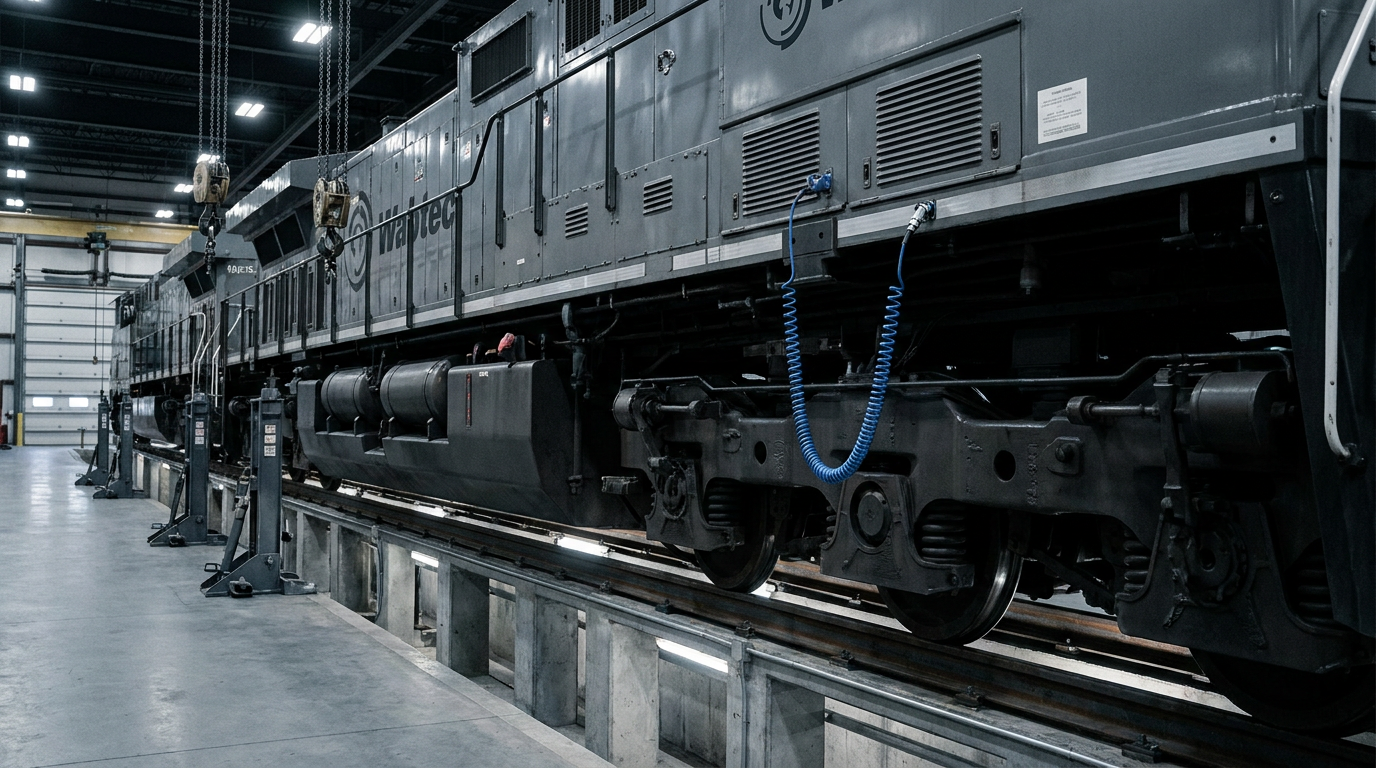
Friday's announcement of a multi-year rail services contract exceeding $700 million by Westinghouse Air Brake Technologies Corporation crystallizes a broader institutional trend across North American and European transportation infrastructure. Class I rail operators and European freight logistics networks are increasingly recalibrating capital expenditure away from outright fleet acquisitions toward complex, performance-indexed lifecycle extensions.
The economic calculus driving this shift reflects both tightening corporate cost discipline and structural supply-chain friction. Over the past three years, new Tier 4 locomotive manufacturing costs and component lead times have inflated alongside critical electrical and pneumatic subsystems. Simultaneously, volume throughput across primary intermodal corridors has experienced episodic volatility. Rather than deploying capital into multi-million-dollar greenfield locomotive platforms, rail carriers are locking in comprehensive service agreements and remanufacturing programs that extend the operational viability of existing heavy-haul units by a decade or more while modernizing traction electronics, fuel management systems, and emissions compliance.
For capital goods manufacturers, this structural evolution fundamentally alters revenue quality and cash-flow visibility. Multi-year service agreements and modernization contracts generate recurring, high-margin aftermarket revenue streams that mitigate the pronounced cyclicality historically inherent to locomotive manufacturing cycles. The transaction underscores an institutional demand for guaranteed operational uptime and predictable maintenance line items. When freight operators transfer component failure risks and heavy maintenance overhead to original equipment manufacturers, they effectively convert lumpy balance-sheet outlays into predictable operational expenditures.
From a technical and operational perspective, the deployment of embedded telematics and predictive diagnostics within modernized power units has become the governing factor in contract economics. Modernized diesel-electric locomotives now integrate multi-sensor telemetry arrays that monitor traction motor temperature, injector spray profiles, and dynamic braking wear in real time. For equipment providers, these continuous data feeds lower warranty provision costs and optimize depot inventory schedules. However, these long-term commitments also introduce margin sensitivity to specialized skilled labor rates and raw alloy pricing over the duration of seven-to-ten-year lifecycle commitments.
Furthermore, the regulatory environment continues to exert nuanced pressure on rolling stock management. While decarbonization directives across the European Union and state-level targets in North America incentivize the eventual adoption of battery-electric and alternative propulsion systems, commercial rail networks remain structurally reliant on heavy diesel-electric platforms for long-haul freight tonnage. The capital requirement to fully electrify transcontinental trackage or build remote alternative fueling infrastructure remains prohibitive over the medium term. Consequently, mid-life overhauls that yield ten- to fifteen-percent reductions in fuel consumption represent the primary viable transition mechanism for institutional freight operators through the early 2030s.
For institutional allocators evaluating the heavy industrial and transportation complex, the bifurcation between primary machinery delivery and long-duration aftermarket servicing offers an informative signal. Durable equipment manufacturers that have successfully transitioned into essential service counterparties provide structural inflation pass-through and balance-sheet resilience. As rail networks navigate shifting trade corridors and mixed volume dynamics, the prioritization of fleet modernization over unhedged equipment expansion demonstrates a disciplined preservation of capital across core industrial logistics.
This commentary is provided for general information only and does not constitute investment, legal or tax advice.